For centuries, the legend of Atlantis has ignited imaginations, sparked furious debate, and launched countless expeditions. Is it a real sunken city, a lost continent awaiting rediscovery, or merely a cautionary tale spun by a philosophical master? The core of this enduring mystery lies in the very question of its existence and, if it did exist, its true location. Delving into the multifaceted theories on Atlantis's location and existence means confronting tantalizing clues, scientific skepticism, and the powerful allure of the unknown.
At a Glance: Unpacking the Atlantis Enigma
- Plato's Origin: The entire legend of Atlantis stems from two dialogues by the philosopher Plato, Timaeus and Critias, written in the 4th century BCE.
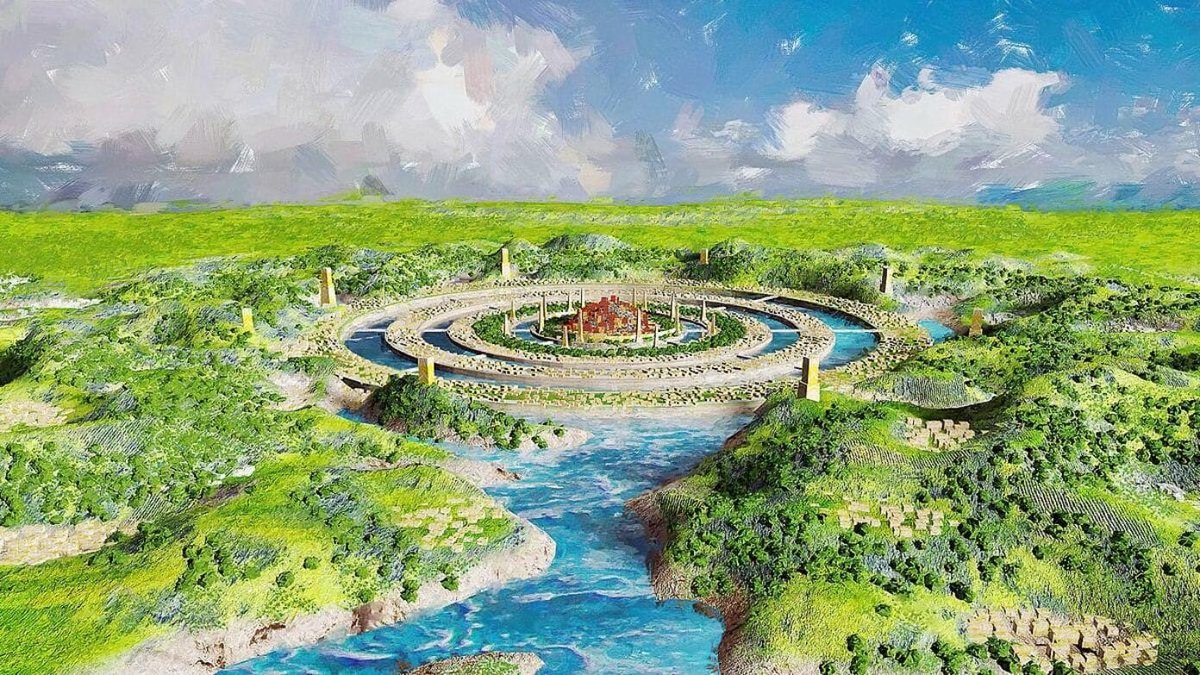
- Core Description: Plato detailed a powerful, advanced island empire "in front of the Pillars of Heracles" (Strait of Gibraltar), rich in resources, with a capital city built in concentric rings of land and water.
- Its Downfall: Atlantis was said to have been defeated by ancient Athens and subsequently swallowed by the sea after a cataclysmic event, all "before the Bronze Age."
- The Central Debate: Was Atlantis a genuine historical account, a memory of a real disaster, or a purely allegorical story designed to illustrate Plato's philosophical ideas about ideal societies and corrupt empires?
- Leading Theories: Scholarly debate often centers on the Minoan civilization (Santorini/Crete) as the most plausible real-world inspiration, while other theories propose locations from Southern Spain to the Sahara.
- Scientific Consensus: Most mainstream scientists and historians lean towards Atlantis being a myth, noting a lack of corroborating evidence outside Plato's account.
The Enduring Allure: What Plato Really Said
Imagine a civilization of unparalleled wealth and technological advancement, boasting impressive architecture, vast resources, and a powerful navy. Now imagine this empire, having grown arrogant and corrupt, attempting to conquer the known world, only to be bravely repelled by a virtuous ancient Athens. Finally, picture it sinking beneath the waves in a single day and night of catastrophic earthquakes and floods. This dramatic narrative is the essence of Atlantis, as recounted by the ancient Greek philosopher Plato.
Writing in the 4th century BCE, Plato introduced Atlantis in his dialogues Timaeus and Critias. He described it as an island empire, grander than any known, situated "in front of the Pillars of Heracles" (which we now know as the Strait of Gibraltar), in the vast "Atlantic Sea." Its capital city was a marvel of engineering, a series of concentric rings of land and water, meticulously planned. Crucially, Plato dated this event to 9,000 years before his own time, placing it far back in prehistory, before the Bronze Age. The story was presented as a true account passed down through generations, originally told to Plato's ancestor Solon by Egyptian priests.
This specific, detailed account, coupled with its dramatic conclusion, is why Atlantis has never faded into obscurity. It’s a powerful narrative that makes us wonder: could such a place have truly existed? Or was Plato, the great philosopher, simply using a fictional tale to convey profound truths about human nature, power, and ideal societies? Understanding the context of Plato's philosophical works is key to appreciating the two main lenses through which scholars approach Atlantis: as a historical possibility or as a powerful allegory.
Deciphering the Riddle: Where Could Atlantis Be?
If Atlantis were real, its location would fundamentally reshape our understanding of ancient history, technology, and civilization. But pinpointing such a place, thousands of years after its supposed demise, is fraught with challenges. Researchers and enthusiasts alike have put forth a staggering array of candidates, each with its own set of compelling matches and frustrating inconsistencies. Let's delve into the leading theories on Atlantis's location and existence, sifting through the evidence and the skepticism.
The Minoan Hypothesis: Santorini's Volcanic Echoes
Among academic circles, this is arguably the most widely discussed and scientifically supported theory for a real-world inspiration behind the Atlantis myth.
The Claim and Its Appeal
Proponents identify the main island of Atlantis with Crete, the heart of the powerful Minoan civilization, and its grand metropolis with the volcanic island of Santorini (ancient Thera). The Bronze Age Minoans were dominant Mediterranean traders, renowned for their sophisticated culture, elaborate palaces, and extensive colonies.
Plato's description of Atlantis finds striking parallels here:
- Geographical Match: Bronze Age Santorini featured a distinct ring of land with a central island and a single sea passage, remarkably similar to Plato's depiction of the Atlantean capital.
- Cultural Resonances: The Minoans constructed colorful buildings using red, white, and black stones, echoing Plato's architectural details. They also engaged in bull worship, a key element in Atlantean rituals, including a type of bull-fighting often performed in temples dedicated to Poseidon – the very deity Plato names as the patron of Atlantis.
- Historical Conflict: Crucially, the Minoans did fight against and were eventually defeated by the Greeks during the Bronze Age, mirroring Atlantis's historical narrative.
- Cataclysmic End: The catastrophic eruption of the Thera volcano around 1600 BCE (or possibly later) destroyed the Minoan city of Akrotiri on Santorini and severely impacted Minoan settlements on Crete, potentially inspiring the vivid account of Atlantis disappearing into the sea.
The Stumbling Blocks
While compelling, the Minoan theory faces questions. The primary objection often raised is that the Minoans were firmly within the Mediterranean, whereas Plato explicitly placed Atlantis "in front of the Pillars of Heracles" in the Atlantic. However, modern research and reinterpretation of ancient Greek geographical understanding suggest that Plato's references might be more flexible or symbolic than a strict modern map interpretation implies, making the Mediterranean location less of a definitive disqualifier. The temporal discrepancy (Plato's 9,000 years vs. Minoan Bronze Age) is also often attributed to a scribal error, where "thousands" was confused with "hundreds."
The Iberian Candidates: Tartessos and Spartel Bank
Moving beyond the Mediterranean, several theories focus on the Strait of Gibraltar and the Atlantic-facing coasts of the Iberian Peninsula and North Africa.
Tartessos: A Sunken Kingdom in Southern Spain
The Claim: This theory points to Tartessos, a rich, ancient civilization that thrived on the Iberian Peninsula, specifically in Andalusia, from the 11th to 6th century BCE. Its location "beyond the Strait of Gibraltar" aligns with Plato's "Pillars of Heracles" description. Tartessos was famed for its wealth, particularly silver, which it supplied to figures like King Solomon. Proponents suggest that Plato's word "nesos," usually translated as "island," could also mean "peninsula" or "river island," which could fit the Iberian Peninsula's unique geography.
The Evidence/Appeal: The Baetic Depression, a vast plain surrounded by mountains, is proposed as a geographical match for Plato's Atlantean plain. Researchers like Richard Freund have claimed satellite images reveal rectangular shapes and concentric rings in the Doñana Marshes, suggesting remnants of an ancient city.
The Stumbling Blocks: The Baetic Depression's actual dimensions and single river don't neatly align with Plato's detailed account. More critically, there's no archaeological evidence that Tartessos existed during the Bronze Age, Plato's specified setting, nor that it engaged in a military conflict with Greeks that resulted in its destruction. Geological evidence also strongly indicates that the Doñana Marshes area has been a marine or estuarine environment for millennia, making a large, terrestrial city unlikely.
Spartel Bank: An Island Lost to Rapid Sea Rise
The Claim: French geologist Jacques Collina-Girard proposed Spartel Bank, a submerged landmass west of the Strait of Gibraltar, as a strong candidate. During the Last Glacial Maximum, when global sea levels were about 135 meters lower, Spartel Bank would have been a small island or archipelago directly in the Atlantic.
The Evidence/Appeal: Collina-Girard suggests that an accelerated sea level rise around 9400 BCE (a period known as Meltwater Pulse 1A) rapidly submerged the main island. This rapid inundation, possibly combined with an earthquake and tsunami similar to the devastating 1755 Lisbon event, could have inspired Plato's story of an island vanishing "in a single day and night." Its location precisely aligns with Plato's "in front of the Pillars of Heracles."
The Stumbling Blocks: While geographically intriguing, other researchers have disputed Collina-Girard's precise dating and the extent to which coincidences are used to connect it to Plato's narrative. The lack of direct archaeological evidence for a major Bronze Age civilization on this now-submerged bank remains a significant hurdle.
The African Angle: Souss-Massa and the Richat Structure
Across the Strait of Gibraltar, the North African coast offers its own unique, albeit controversial, interpretations of Atlantis.
Souss-Massa Plain: Morocco's Lost City
The Claim: Michael Hübner, using a systematic approach based on Plato's textual analysis, identified the Souss-Massa plain in southwest Morocco as Atlantis. This plain is naturally surrounded by the High Atlas, Anti-Atlas mountains, and the Atlantic Ocean ("Sea of Atlas"), which the indigenous Amazigh (Berber) people traditionally refer to as an "island."
The Evidence/Appeal: Hübner points to a large, annular caldera-like geomorphological structure within this plain whose dimensions closely match Plato's description of the Atlantean capital. Hundreds of prehistoric ruins, built with red, white, and black stones (matching Plato's details), are scattered across this structure. Possible harbor remains are located near this structure and Cape Ghir, which corresponds to Plato's "Cape Heracles." Furthermore, Agadir, a major city in the region, has an etymological link to Plato's "Gadir" ('enclosure,' 'fortification,' 'sheep fold'), aligning with the Greek translation of Gadeiros (Eumelos, 'rich in sheep'), one of Atlantis's founding figures.
The Stumbling Blocks: This theory, while compelling in its detailed geographic and linguistic matches, is relatively recent and still undergoing rigorous scrutiny from mainstream archaeology and geology. The specific dating of the prehistoric ruins and their direct connection to Plato's detailed narrative require further definitive proof.
Richat Structure (Eye of the Sahara): A Ring of Controversy
The Claim: This striking natural geological formation in Mauritania, often called the "Eye of the Sahara," features a series of concentric ridges and depressions. If at sea level, proponents argue, it would bear an uncanny resemblance to Plato's metropolis.
The Evidence/Appeal: Some point to evidence of ancient water channels and "salt" in its depressions, suggesting a past maritime connection. Ancient maps are sometimes cited as associating 'Atlantes' (a form of Atlantis) with the region.
The Stumbling Blocks: The 'salt' is primarily desert efflorescence, not marine salt. The name 'Atlantes' refers to a people, not a specific place, and was associated with Mount Atlas (geographically distant) long after Homer's time, well after the purported origin of the Atlantis story. Crucially, archaeological surveys have found no prehistoric artifacts or man-made structures in its inner depressions, indicating only temporary use by hunter-gatherers, not a sprawling, advanced civilization. The Richat Structure is a geological dome, not a sunken city.
The Lost Continent School: From the Atlantic to Antarctica
Many early interpretations of Atlantis took Plato literally, envisioning a massive continent that simply sank into the ocean.
The Atlantic Ocean: Echoes of a Vanished Land
The Claim: This traditional view posits a real, large landmass or continent in the middle of the Atlantic Ocean, precisely matching Plato's specified location "in front of the Pillars of Heracles and in the Atlantic Sea." The Azores Islands are sometimes proposed as the surviving peaks of this submerged land. Widespread flood myths across cultures are often cited as a collective memory of this devastating event.
The Stumbling Blocks: Modern plate tectonics definitively disproves the existence of a large sunken continent between Europe/Africa and the Americas. The Azores are volcanic islands, formed by geological uplift over millions of years (with raised beaches up to 250 meters from the Pleistocene era), not remnants of a subsided landmass. While dramatic, flood myths have diverse origins and are not necessarily linked to a single, global event. To understand how ancient civilizations handled such events, it helps to explore other Bronze Age mysteries and their archaeological interpretations.
The Americas: A New World, An Old Myth?
The Claim: Following the European discovery of the New World in the 16th century, some scholars, like Francisco López de Gómara, proposed the Americas as Atlantis. They suggested that Plato's 9,000 "years" might have been a mistranslation or a symbolic measure, perhaps meaning 9,000 "months" (750 years), which would align more closely with European contact. Maps from the 16th and 17th centuries even labeled parts of North and South America as "Atlantis Insula."
The Stumbling Blocks: Beyond the chronological gymnastics, this theory lacks any direct textual support from Plato and relies heavily on interpretive leaps rather than archaeological or geological evidence linking ancient American civilizations directly to Plato's specific account. The cultural and technological descriptions of Atlantis don't neatly fit known pre-Columbian American civilizations.
Antarctica: The Frozen Utopia
The Claim: Popular in the 1960s-70s, this theory often drew from ideas like Charles Hapgood's "Earth Crustal Displacement," which hypothesized that Antarctica was in a more temperate zone and habitable around 10,000 years ago, fitting Plato's timeline.
The Stumbling Blocks: Hapgood's geological theories have been largely debunked by mainstream science. The ice sheets of Antarctica have been in place for millions of years, making a habitable, civilized Antarctica at Plato's specified time frame impossible without overturning fundamental geological and climatological understanding.
The Allegory Argument: Plato's Philosophical Play
Not every theory seeks a physical location. Many scholars, especially classicists, view Atlantis as a literary device.
Allegory for the Persian Empire: A Cautionary Tale for Athens
The Claim: This theory suggests that Plato's account of a powerful, wealthy, and arrogant island empire that attempts to conquer virtuous Athens is a thinly veiled allegory for the historical Persian Empire. The Persians, a formidable power, were famously defeated by the Greeks at the Battles of Marathon and Salamis, a victory that shaped Greek identity and pride, and a key event in the rise of ancient Athens.
The Evidence/Appeal: The parallels are clear: a vast, rich empire (Persia) attempting to conquer Greece (Athens), ultimately defeated by the smaller, more virtuous Greek city-states. Plato frequently used historical events and characters in his philosophical works to convey moral and political lessons.
The Stumbling Blocks: This interpretation, while strong in its philosophical resonance, clashes with the explicit context of Plato's dialogue Timaeus, where Socrates asks Critias to provide a "true story" as a real-world validation for the ideal state discussed earlier. If Plato intended it purely as an allegory for Persia, why frame it as a historical account from Egyptian priests? This specific framing makes it challenging for those seeking a purely allegorical interpretation.
Other Intriguing, Yet Less Substantial, Ideas
The quest for Atlantis has led researchers down many paths, some more speculative than others.
- Sardinia: Identified as a wealthy Bronze Age Nuragic civilization with bull worship, mirroring some of Plato's details. However, Egyptian records show the Sherden (Sea Peoples from Sardinia) fought alongside Greeks, not against Atlanteans, and there's no evidence of a major Bronze Age disaster there.
- Black Sea: Some theories place Atlantis here before 5500 BCE, when a great plain was allegedly flooded by rising sea levels topping the Bosporus. Others suggest an earthquake in 9600 BCE caused a similar flood. These are largely speculative, lacking direct correlation with Plato's specifics.
- North Pole: Proposed by William Fairfield Warren (1885) as a folk memory of a primordial human homeland, a highly symbolic interpretation.
- Helike (Mainland Greece): The real-world destruction of Helike by an earthquake and tsunami in 373 BC, shortly before Plato wrote his dialogues, is often cited as a direct inspiration for the dramatic downfall of Atlantis. Plato could have used this recent disaster as a template for his story.
- Cyprus Basin: Robert Sarmast controversially proposed Atlantis at 1,500 meters depth in the Cyprus Basin, based on sonar images he interpreted as structures. Geologists have widely refuted this, identifying the images as natural geological formations, potentially related to the Messinian Salinity Crisis.
- Northern Europe (e.g., Irish Sea, Doggerland, Denmark): Various authors have linked Atlantis to drowned prehistoric lands in Northern Europe. While these regions do have submerged prehistoric landscapes (like Doggerland), the specific cultural and historical details of Plato's Atlantis do not align.
Navigating the Myth: Why It Matters Even If It's Not "Real"
The vast range of theories on Atlantis's location and existence highlights both the human drive for discovery and the challenges of interpreting ancient texts. When considering these theories, it's crucial to distinguish between direct archaeological evidence, geological plausibility, and interpretive readings of a philosophical text.
The Philosophical Weight vs. Historical Fact
For many classicists, the historical existence of Atlantis is secondary to its philosophical purpose. Plato, a master storyteller, used myths and allegories throughout his work to illustrate complex ideas about justice, governance, and human nature. The story of Atlantis serves as a cautionary tale: a powerful, materially rich society succumbs to hubris and moral decay, ultimately facing divine retribution. In this sense, Atlantis is "real" in its conceptual power, much like George Orwell's 1984 or Thomas More's Utopia. Understanding how to interpret ancient myths is a valuable skill for anyone exploring these narratives.
Yet, the precise details Plato provides—the concentric rings, the specific metals, the exotic animals, the location "in front of the Pillars of Heracles"—are so vivid that they continually tempt us to seek a physical counterpart. This tension between allegory and history is precisely what fuels the ongoing debate.
Evaluating New Atlantis Claims: Your Guide
Given the sheer volume of theories, how can you, as a curious seeker, evaluate new claims about Atlantis? Here are a few practical considerations:
- Start with Plato: Does the theory directly address Plato's specific details—geography, timeline, culture, and especially the method of destruction? Be wary of theories that cherry-pick details or significantly alter Plato's account.
- Geological Plausibility: Does the proposed location make sense geologically? Can a continent truly sink? Are rapid, widespread inundations possible in the proposed timeframe? Plate tectonics and paleogeography are powerful tools for debunking impossible claims.
- Archaeological Evidence: Is there any independent archaeological evidence for a highly advanced civilization at the proposed site, especially one that vanished catastrophically "before the Bronze Age"? Extraordinary claims require extraordinary evidence.
- Temporal Consistency: Does the timeline of the proposed site align with Plato's "9,000 years before Solon" or a plausible interpretation thereof? If a theory relies on a major reinterpretation of Plato's dates (e.g., 9,000 months), is that reinterpretation well-justified?
- Source Credibility: Who is making the claim? Is it a reputable academic institution, a fringe theorist, or someone with a commercial interest? While groundbreaking discoveries can come from anywhere, academic rigor and peer review are vital.
The Unending Journey for a Lost World
Ultimately, whether Atlantis was a historical reality or a powerful philosophical construct, the fascination with its legend persists. It speaks to our deep-seated desire for lost worlds, for advanced civilizations that vanished, and for answers to life's biggest questions. Even if a definitive sunken city is never found, the ongoing exploration of theories on Atlantis's location and existence continues to push the boundaries of archaeology, geology, and our understanding of ancient texts. It reminds us that history is not just about what we've found, but also about what we're still searching for, and the journey itself is often the greatest reward.